The Ultimate Hurricane Season Waste Checklist for Businesses and Homeowners
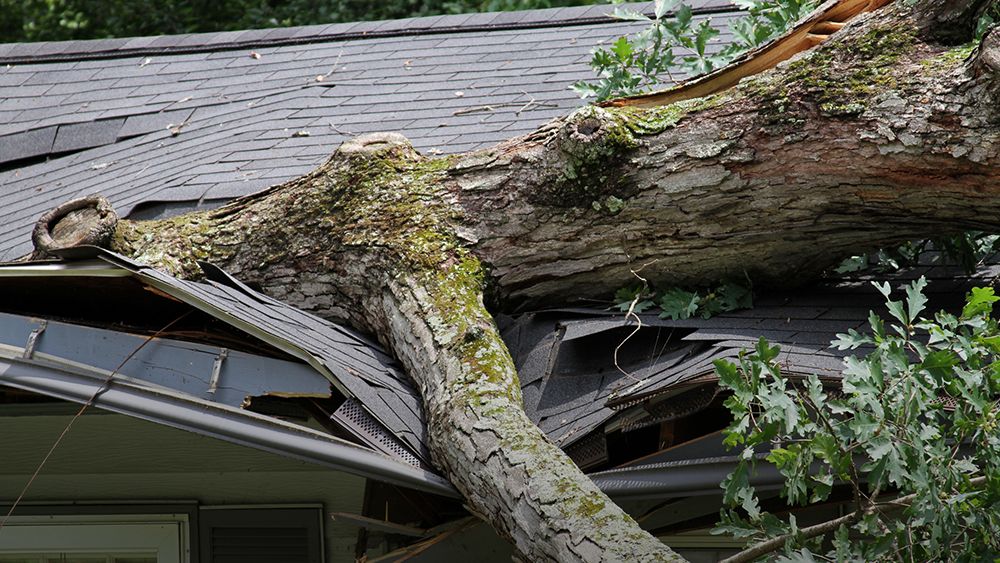
Living in Florida means preparing for hurricane season is a way of life. From high winds and flooding, to downed trees and damaged property, storms often leave behind a trail of debris that must be managed safely and quickly. Whether you’re a homeowner or a business owner, having a waste plan in place before and after a storm is essential.
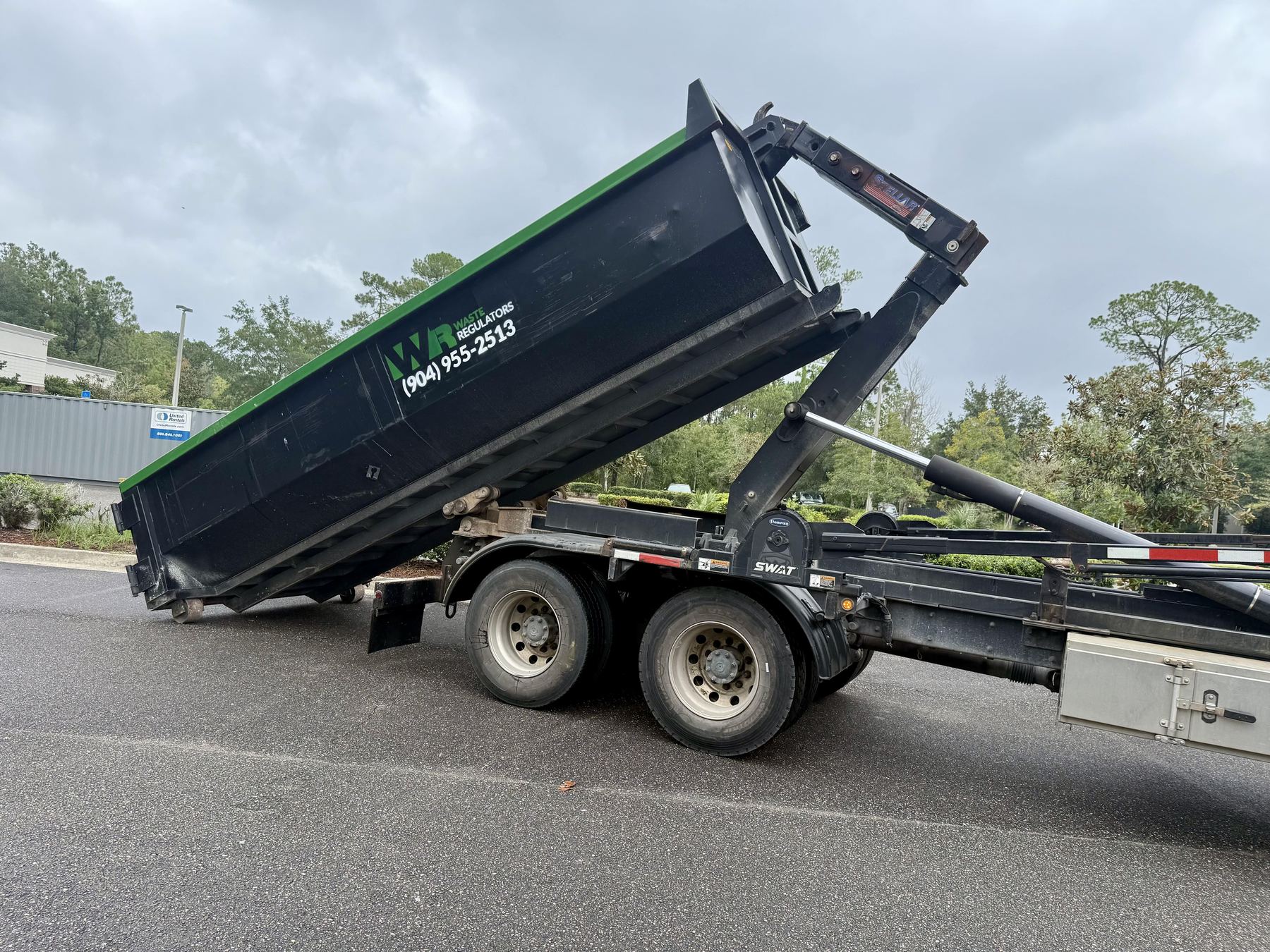
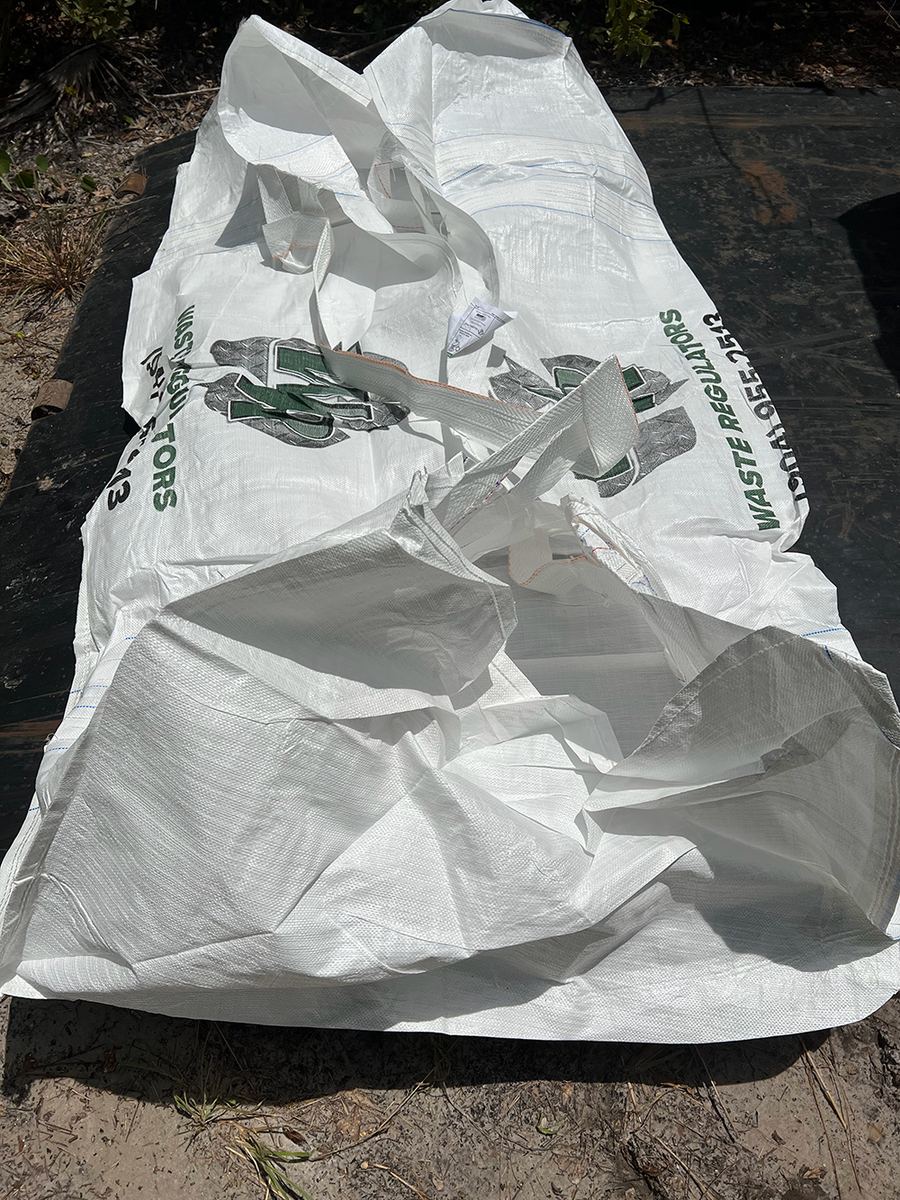
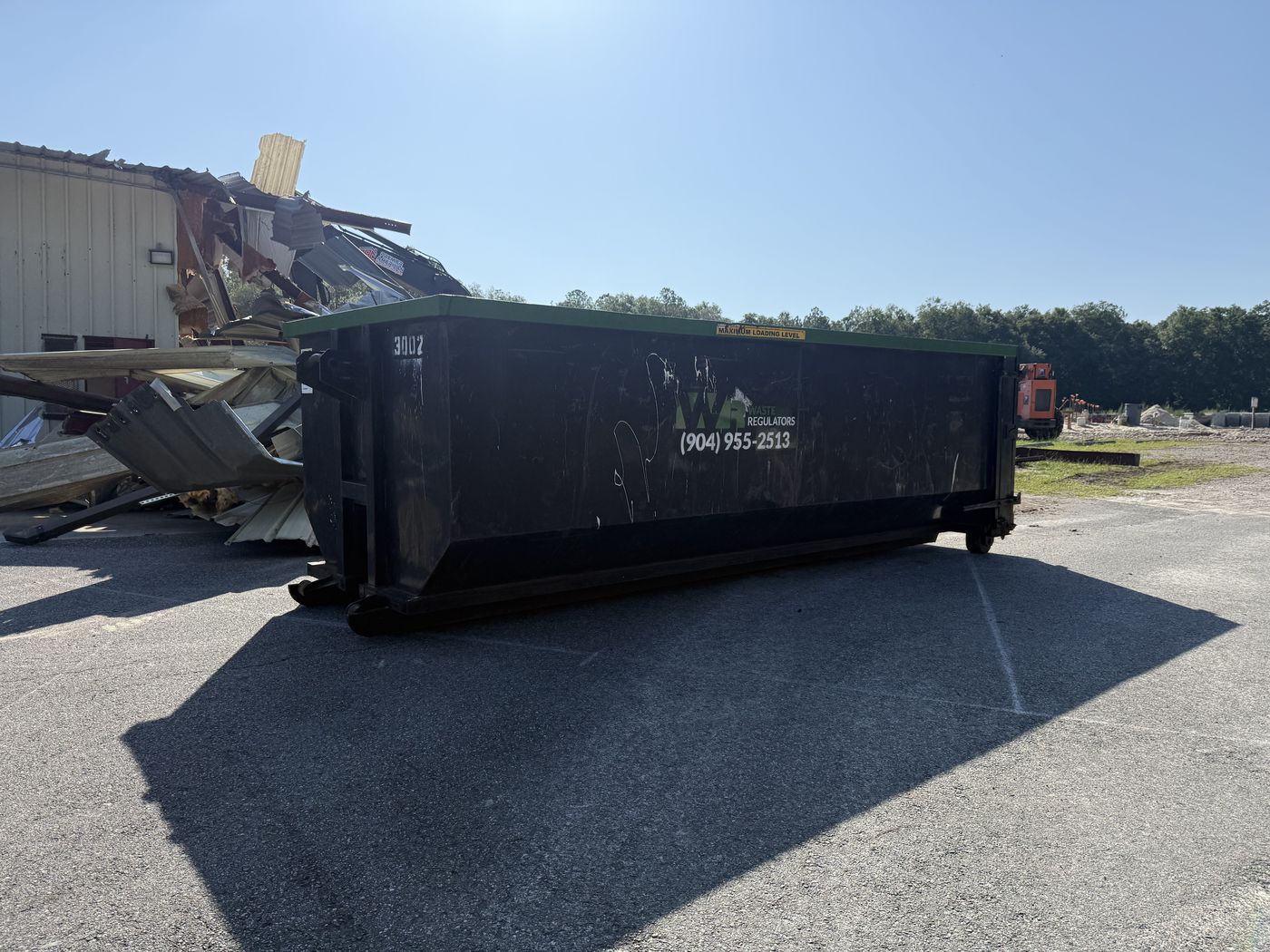
At Waste Regulators, we serve Duval, St. Johns, Clay, Putnam and Nassau counties with roll-off dumpsters, dumpster bags and portable toilets for storm cleanup. Here’s how to prepare for hurricane season and manage debris responsibly.
1. Pre-Storm Preparation: Minimize Potential Hazards
Clear Your Property
- Trim back dead branches and remove loose landscaping debris.
- Secure or store patio furniture, grills, and outdoor equipment.
- Collect and dispose of bulky waste items that could become projectiles in strong winds.
Use Dumpsters or Dumpster Bags Before the Storm
If you’re already planning a renovation, yard cleanup or cleanout, schedule a roll-off dumpster or compact dumpster bag pickup before the storm arrives. This ensures loose waste isn’t left unsecured.
2. Stay Safe During the Storm
During the storm itself, safety comes first:
- Avoid moving waste or debris once the storm begins.
- Stay indoors and keep emergency supplies on hand.
- Keep dumpsters, bags, or bins free from overloads and secured.
Remember, it’s better to prepare beforehand than to scramble once the storm is underway.
3. Post-Storm: Assess and Organize Debris
When the storm has passed, you’ll likely face cleanup needs. Start by carefully walking your property and identifying debris:
- Yard Waste: Tree limbs, branches, and landscaping debris.
- Construction & Structural Debris: Shingles, siding, drywall, or fencing.
- Household Junk: Damaged furniture, appliances, or clutter.
Safety Note: Always wear gloves, closed-toe shoes, and protective gear when handling storm debris. Be cautious of downed power lines or unstable structures.
4. Arrange for Professional Cleanup
Large volumes of storm debris can’t always be handled through normal waste pickup. This is where professional services are essential:
- Roll-Off Dumpsters: Ideal for mixed debris from home damage or business property cleanup.
- Dumpster Bags: Great for homeowners with smaller amounts of storm waste.
Scheduling professional services quickly after a storm helps you avoid delays, ensures compliance with local regulations, and keeps your property safe and accessible.
5. Dispose of Hazardous Waste Separately
Not all storm debris can go into a dumpster. Hazardous waste should be handled with care:
- Paint, oil, fuel, and chemicals must be disposed of at designated county facilities.
- Electronics and batteries should not be placed in dumpsters or bags.
- Contact your local county waste authority for drop-off sites and guidance.
6. Support Local Waste Services
After major storms, large national companies often become overwhelmed, leading to delays. Local providers like Waste Regulators offer faster response times and a genuine commitment to the community. By choosing local, you’re supporting neighbors while getting personalized, dependable service when you need it most.
Conclusion
Hurricane season preparation goes beyond securing windows and stocking supplies, it also means having a plan for waste and debris removal. By clearing your property before the storm, arranging proper disposal, and relying on local professionals after the storm, you can recover faster and safer.
At Waste Regulators, we’re here to help Northeast Florida homeowners and businesses with roll-off dumpsters, dumpster bags and portable toilets, so when storms hit, you’re never left without a solution.
Contact us today to set up your pre-storm waste plan and ensure you’re ready for hurricane season.